Fire safety is essential in every industry, from construction sites and manufacturing units to hospitals, airports, and oil and gas facilities. As organisations place greater importance on workplace safety and employee protection, the need for trained fire and safety professionals continues to create career opportunities in India and abroad.
For students who have completed Plus Two, ITI, a diploma or graduation, fire and safety training can be a practical step towards entering this professional field.
If you are exploring jobs after fire and safety course, there are several career paths worth considering. Depending on your qualification, certification and practical experience, you can work in different industries and gradually progress into supervisory and management positions.
Let’s explore the top 10 career opportunities available after completing a fire and safety course.
Top 10 Jobs After Fire and Safety Course
1. Fire Safety Officer
A Fire Safety Officer is responsible for preventing fire-related accidents and ensuring that buildings and workplaces follow appropriate fire safety procedures.
Their responsibilities include conducting fire safety inspections, identifying potential hazards, checking firefighting equipment and organising emergency evacuation drills. They may work in hospitals, shopping malls, hotels, factories and commercial buildings.
2. Safety Officer
Safety Officers help organisations maintain safe working environments by identifying workplace hazards and preventing accidents.
Their daily responsibilities include conducting site inspections, monitoring safety practices, ensuring the proper use of personal protective equipment (PPE) and preparing safety reports. Construction companies, infrastructure projects and manufacturing industries regularly require qualified safety professionals.
3. HSE Officer
A Health, Safety and Environment (HSE) Officer focuses on protecting employees, maintaining workplace safety and reducing environmental risks.
The role involves risk assessments, safety training, incident reporting and monitoring compliance with workplace safety standards. HSE Officers are employed in construction, oil and gas, engineering, logistics and manufacturing sectors.
Additional qualifications such as NEBOSH or IOSH can help candidates strengthen their professional knowledge and career prospects.
4. Industrial Safety Supervisor
Industrial Safety Supervisors monitor safety activities in factories, production units and other industrial environments.
They ensure that workers follow established safety procedures, machinery is operated safely, and potential workplace hazards are addressed. They also coordinate safety inspections and communicate safety requirements to employees.
This role is suitable for candidates interested in industrial operations and workplace safety management.
5. Firefighter
Firefighters respond to emergencies involving fires, accidents and other hazardous situations. Their primary responsibility is to protect human lives and property through firefighting, rescue operations and emergency response.
They may work with fire departments, industrial emergency response teams, airports and other organisations with dedicated firefighting units.
Physical fitness, practical firefighting knowledge and additional recruitment requirements are important for this career.
6. Fire Alarm and Safety Equipment Technician
Fire alarm technicians install, inspect, maintain and repair fire detection and alarm systems.
Their work includes checking smoke detectors, fire alarms, emergency lighting, fire extinguishers, and other essential safety equipment.
They can find opportunities with fire protection companies, building maintenance contractors, commercial establishments and industrial facilities. Technical knowledge and hands-on equipment training are particularly valuable in this role.
7. Safety Inspector
Safety Inspectors examine workplaces to identify unsafe conditions and ensure that organisations follow applicable safety requirements.
They conduct inspections, review safety documentation, identify potential risks and recommend corrective actions. Their work helps reduce workplace accidents and improve overall safety standards.
Manufacturing facilities, construction projects and industrial organisations offer opportunities in this field.
8. Risk Assessment Officer
Risk Assessment Officers identify possible dangers before they result in workplace accidents or operational disruptions.
They evaluate workplace activities, analyse potential hazards and recommend suitable control measures. They may also assist in preparing risk assessment documents and monitoring whether safety improvements are effective.
This career is particularly relevant to construction, oil and gas, manufacturing and other high-risk industries.
9. Fire and Safety Trainer
If you enjoy teaching and sharing technical knowledge, becoming a Fire and Safety Trainer can be another career option.
Trainers educate employees and students about fire prevention, emergency response, firefighting equipment, evacuation procedures and workplace safety practices.
They may work with training institutes, industrial organisations and corporate safety departments. Professional experience and relevant qualifications can improve opportunities in this field.
10. EHS Coordinator
An Environment, Health and Safety (EHS) Coordinator helps organisations manage their workplace health, safety and environmental responsibilities.
The role includes maintaining safety records, coordinating inspections, arranging employee training and supporting compliance activities. EHS Coordinators often work alongside management teams, safety officers and department supervisors.
With relevant experience and additional professional certifications, candidates can progress towards senior EHS positions.
Which Industries Offer Jobs After a Fire and Safety Course?

Fire and safety professionals are needed across different industries because workplace hazards can occur in almost any working environment.
Some major employment sectors include:
- Construction and infrastructure: Building projects, road construction and large infrastructure developments.
- Oil and gas: Refineries, offshore facilities, drilling operations and petroleum industries.
- Manufacturing: Factories, production units and industrial plants.
- Healthcare: Hospitals, medical centres and healthcare facilities.
- Aviation: Airports, aircraft maintenance facilities and aviation operations.
- Hospitality: Hotels, resorts, commercial kitchens and large event venues.
- Logistics and warehousing: Storage facilities, distribution centres and transportation companies.
In India, opportunities are available in industrial hubs and infrastructure projects across states, including Kerala, Tamil Nadu, Karnataka and Maharashtra. International opportunities can also be found in Gulf countries such as the UAE, Saudi Arabia, Qatar, Oman and Kuwait.
What Qualifications Do You Need to Start a Fire and Safety Career?
The qualifications required depend on the job role, employer and industry.
Generally, students with qualifications such as SSLC, Plus Two, ITI, a diploma or graduation may be eligible for different fire and safety training programmes.
However, specialised positions may require additional educational qualifications, technical knowledge, professional certifications or relevant work experience.
Some useful certifications include:
- Fire and Industrial Safety
- NEBOSH International General Certificate (IGC)
- IOSH Managing Safely
- OSHA Safety Training
- ISO 45001 Lead Auditor
Choosing the right course and certification can help you develop the knowledge required for specific workplace safety roles.
How to Build a Successful Career in Fire and Safety
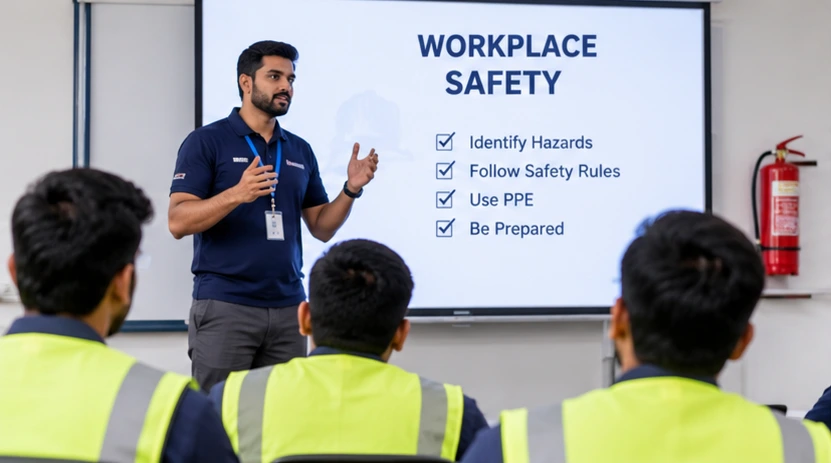
Completing a course is an important first step, but developing practical skills is equally important.
Here are a few ways to improve your career prospects:
- Choose a recognised and relevant fire and safety training programme.
- Gain practical knowledge of firefighting equipment and emergency procedures.
- Develop skills in hazard identification and risk assessment.
- Improve your communication, documentation and reporting skills.
- Consider additional certifications such as NEBOSH or IOSH.
- Apply for entry-level positions and gain industry experience.
Employers often look for candidates who understand safety procedures and can apply their knowledge in real workplace situations.
Start Your Fire and Safety Career with Inspirit Safety Solutions
Choosing the right training institute can make an important difference when starting a career in fire and industrial safety.
Inspirit Safety Solutions Pvt. Ltd. provides professional fire and safety training in Kerala, with training centres in Thiruvalla and Kozhikode, along with additional learning options.
The institute offers job-oriented training designed to develop practical knowledge, technical skills, and industry awareness. Its programmes cover important areas such as fire prevention, hazard identification, emergency response and industrial safety.
With placement assistance and professional training opportunities, Inspirit Safety Solutions supports students who want to explore career opportunities in India and Gulf countries.
Whether you are a fresher or looking to improve your professional qualifications, the right training can help you take the next step towards a career in workplace safety.
Ready to begin your career in fire and safety? Explore the training programmes offered by Inspirit Safety Solutions and take the first step towards a professional future in the safety industry.
Frequently Asked Questions (FAQs)
1. What are the jobs after completing a fire and safety course?
Some common jobs include Fire Safety Officer, Safety Officer, HSE Officer, Industrial Safety Supervisor, Firefighter, Safety Inspector and EHS Coordinator.
2. Can I get a job after a fire and safety course?
Yes. You can apply for entry-level positions depending on your educational qualification, course certification and the employer’s requirements. Practical training and relevant experience can improve your employment prospects.
3. Is fire and safety a good career option after Plus Two?
Yes. Students who have completed Plus Two can explore suitable fire and safety training programmes and pursue entry-level opportunities in industries such as construction, manufacturing and industrial operations.
4. Can I get a fire and safety job in Gulf countries?
Yes. Gulf countries, including the UAE, Saudi Arabia, Qatar and Oman, offer opportunities in construction, oil and gas, manufacturing and infrastructure. Employers may require specific certifications and relevant experience.
5. Which certification is best for a fire and safety career?
The right certification depends on your career goals. Fire and Industrial Safety training provides foundational knowledge, while NEBOSH, IOSH and OSHA qualifications can help develop additional occupational health and safety skills.